Home › Blog › PPO vs HMO vs EPO vs POS
PPO vs HMO vs EPO vs POS: What Is the Difference?
Written and reviewed by Dick Tracy, licensed health insurance broker (NPN 20414610) · Published August 27, 2026
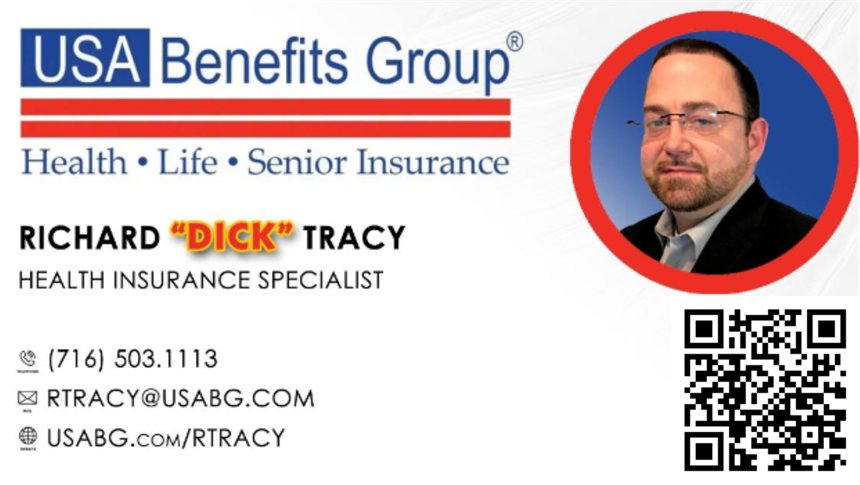
The difference between a PPO, HMO, EPO and POS comes down to three questions: Do you have to pick a primary care doctor? Do you need a referral to see a specialist? Are you covered out of network? A PPO answers no, no, yes and costs the most. An HMO answers yes, yes, no and costs the least. An EPO answers no, no, no. A POS answers yes, yes, yes. Everything else is detail.
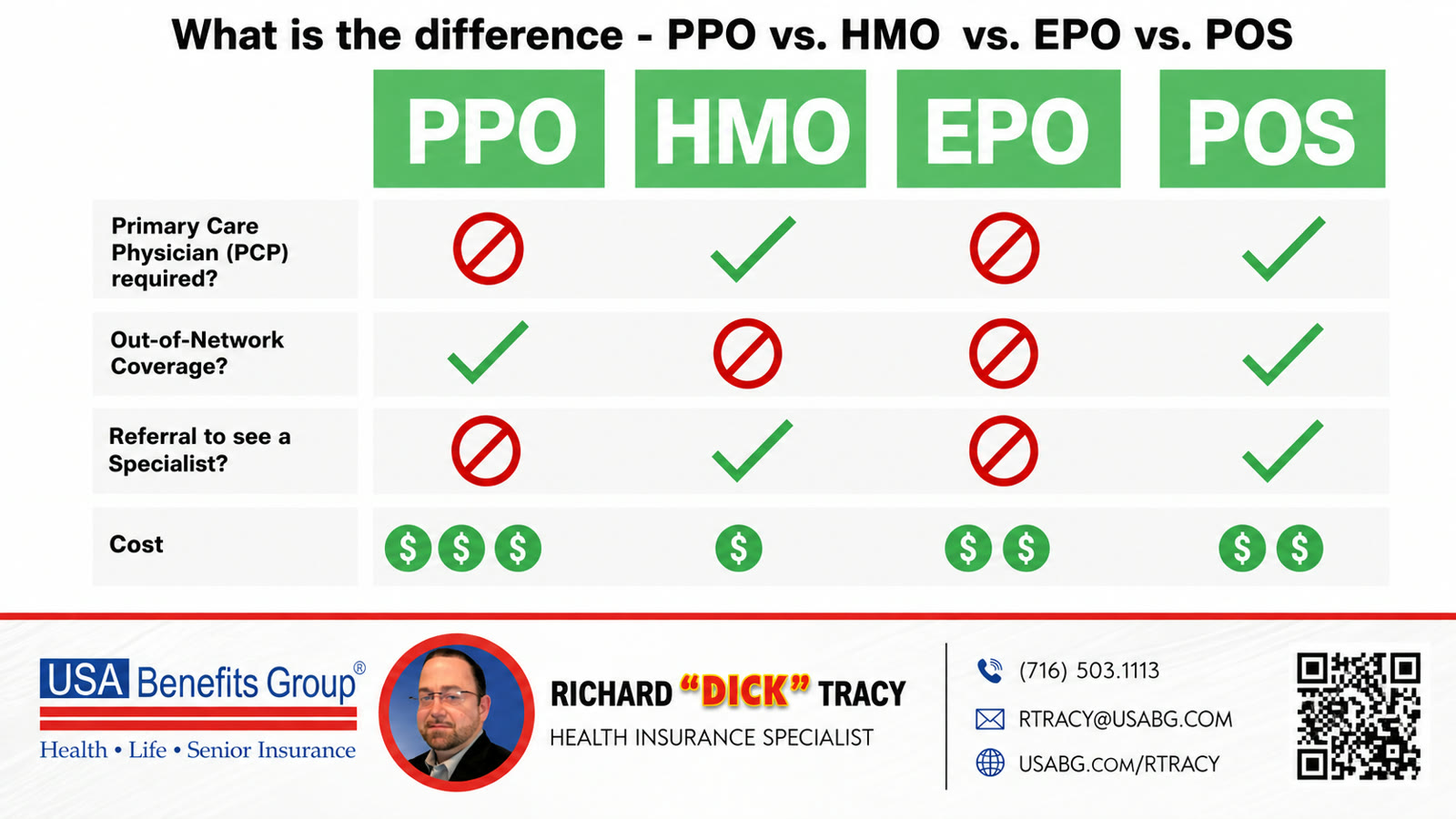
⬇ Download the chart
The same chart in words (for the skimmers and the search engines)
| Question | PPO | HMO | EPO | POS |
|---|---|---|---|---|
| Primary care physician (PCP) required? | No | Yes | No | Yes |
| Out-of-network coverage? | Yes | No | No | Yes |
| Referral to see a specialist? | No | Yes | No | Yes |
| Relative cost (premium) | $$$ highest | $ lowest | $$ middle | $$ middle |
| Best for | Travelers, people with out-of-town specialists, anyone who wants freedom | Budget first, doctors already in network | No referrals, in-network only, mid price | Wants HMO price with an out-of-network safety valve |
I'm Dick Tracy, an independent health insurance broker in Western New York, licensed in 25 states with 80+ carriers behind me. I came out of the healthcare side of this business, so I have watched what happens when someone buys the wrong letters. Here is each plan type in plain English, with the trap in each one.
PPO: Preferred Provider Organization
A PPO is the freedom plan. No primary care doctor to pick, no referral to see a specialist, and you are still covered if you go out of network (at a higher share of the bill). You pay for that freedom in the premium, which is why PPOs sit at the top of the price ladder. If you travel, split time between states, or have a specialist you refuse to give up, a PPO is usually the right tool.
The trap: "PPO" on the card does not mean every PPO is the same. Some marketplace plans are labeled PPO with a network so thin that "out-of-network coverage" means a 50% share of a bill priced at full sticker. Ask what the out-of-network deductible and out-of-pocket max are, not just whether it exists. The best PPO I write is a private, underwritten one where in-network care is capped at copays with no coinsurance. I wrote that one up in the unlimited-copay PPO guide.
HMO: Health Maintenance Organization
An HMO is the budget plan. You choose a primary care physician who acts as your gatekeeper, you need a referral from that doctor before you see a specialist, and outside of a true emergency there is no out-of-network coverage at all. In exchange, the premium is the lowest of the four.
The trap: the cheap plan you cannot use. If your doctor, your kid's pediatrician, or the hospital you would actually go to is not in the HMO network, you either switch doctors or pay cash. People buy the HMO in December to save $80 a month and find out in February that the specialist they need is out of network. Check the network first, price second. Always.
EPO: Exclusive Provider Organization
An EPO is the middle child. Like a PPO, no primary care doctor and no referrals; you can book a specialist directly. Like an HMO, zero out-of-network coverage except emergencies. Step outside the network and the entire bill is yours. Premiums land between the HMO and the PPO.
The trap: the word "exclusive" is doing all the work. People hear "no referrals" and assume it is a PPO. It is not. One out-of-network MRI on an EPO is a four-figure cash bill. If you take an EPO, live inside the network like it is a fence.
POS: Point of Service
A POS plan is an HMO with an escape hatch. You pick a primary care physician and you need referrals, but if you go out of network you still have partial coverage, at a higher cost to you. It is for the person who wants HMO pricing most of the time and a way out when they need it.
The trap: POS plans are the least common of the four, and the out-of-network side usually has its own separate deductible. If you plan to use the escape hatch, price the escape hatch.
The New York twist nobody tells you
If you shop the individual marketplace in New York, you will notice something fast: almost everything is an HMO or an EPO. A real PPO with a national network is rare on the individual side here, and when it exists it is expensive. That is not you shopping wrong. That is the market.
Healthy self-employed people and small business owners do have a path to a true PPO: merging into a pre-established ERISA group plan, which follows federal law instead of New York's community rating. Group rates, a national PPO network, and a policy you own. I call it the cheat code and I explain the whole thing in the ERISA group plan guide. If you are self-employed with no employees, start with this one instead.
How to pick: three questions before you look at a price
Common questions about PPO, HMO, EPO and POS plans
What is the difference between a PPO and an HMO?
A PPO (Preferred Provider Organization) lets you see any doctor, in or out of network, without picking a primary care physician or getting a referral, and it usually has the highest premium. An HMO (Health Maintenance Organization) requires you to choose a primary care physician, get a referral before seeing a specialist, and stay in network except for emergencies, and it usually has the lowest premium. In short: PPO buys freedom, HMO buys a lower price.
What is an EPO health plan?
An EPO (Exclusive Provider Organization) is a middle option. Like a PPO, you do not need a primary care physician or referrals to see specialists. Like an HMO, there is no out-of-network coverage except for true emergencies. If you go to a provider outside the network, you pay the full bill yourself. EPO premiums typically land between HMO and PPO.
What is a POS health plan?
A POS (Point of Service) plan is an HMO with an escape hatch. You choose a primary care physician and need referrals to see specialists, but you can go out of network and still have partial coverage at a higher cost to you. Premiums usually sit between an HMO and a PPO.
Do I need a referral to see a specialist with a PPO?
No. PPO and EPO plans let you book a specialist directly. HMO and POS plans require a referral from your primary care physician first, and if you skip that step the claim can be denied.
Is an HMO cheaper than a PPO?
On monthly premium, almost always yes. HMOs are the least expensive plan type and PPOs are the most expensive, with EPO and POS in between. But the premium is only part of the cost. If your doctors or hospital are not in the HMO network, the cheaper plan can cost you far more in cash-pay bills. Check the network before you compare prices.
Which health plan type is best for self-employed people and small business owners?
It depends on your doctors, your prescriptions, and whether you travel. If you want a true PPO with a national network, in New York that usually means going outside the individual marketplace, where most plans are HMOs or EPOs. Healthy self-employed people and small businesses can often access a real PPO through a pre-established ERISA group plan. If you are on a tight budget and your doctors are in network, an HMO or EPO can be the right call. An independent broker can compare all four side by side.
Can I keep my current doctor with an HMO?
Only if your doctor is in that HMO's network. Networks change every year, so never assume. Look your doctor up in the plan's directory, then call the office and ask if they accept that specific plan, not just that carrier. A doctor can take one Blue Cross plan and not another.
Tell me your doctors, your prescriptions, and your zip code. I will show you the PPO, HMO, EPO and POS options side by side with real numbers, including the ones the marketplace never shows you. No hard sell, ever. I educate, you decide.
Grab a time right here
Pick a slot below and it lands on both our calendars. No phone tag, no hard sell. I educate, you decide.